
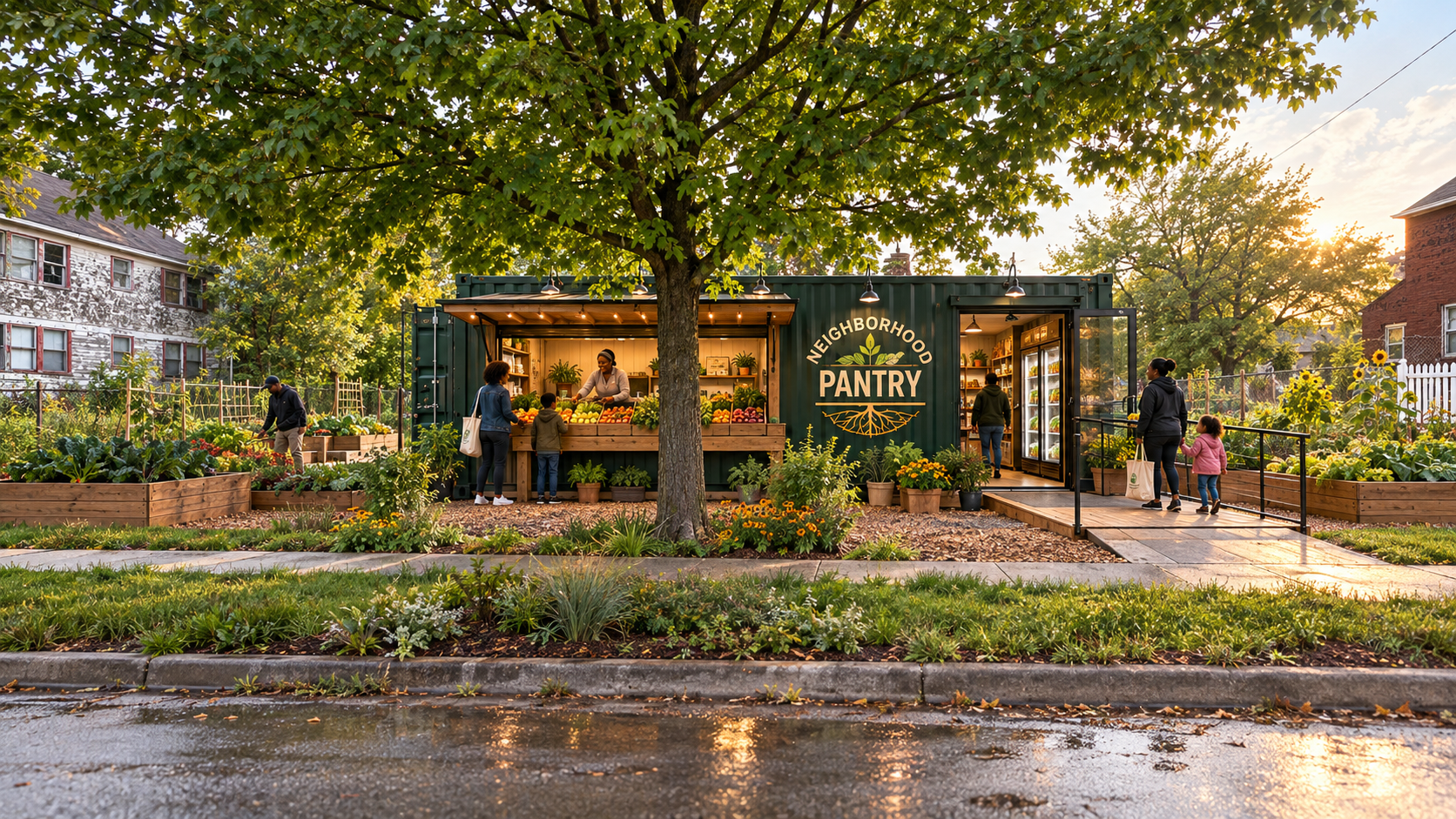
TheNeighborhoodPantry.
A neighborhood-scale farm stop. A local food economy.
A proposed Detroit farm stop and growing network for fresh-food access and local business sales.
Turn neighborhood land into growing, retail, and reinvestment.
Food grown here. Value created here. Dollars kept here.
Neighborhood growers supply local businesses. Their products return to the farm stand, keeping sales and reinvestment close to home.
Prepare underused parcels for growing and retail.
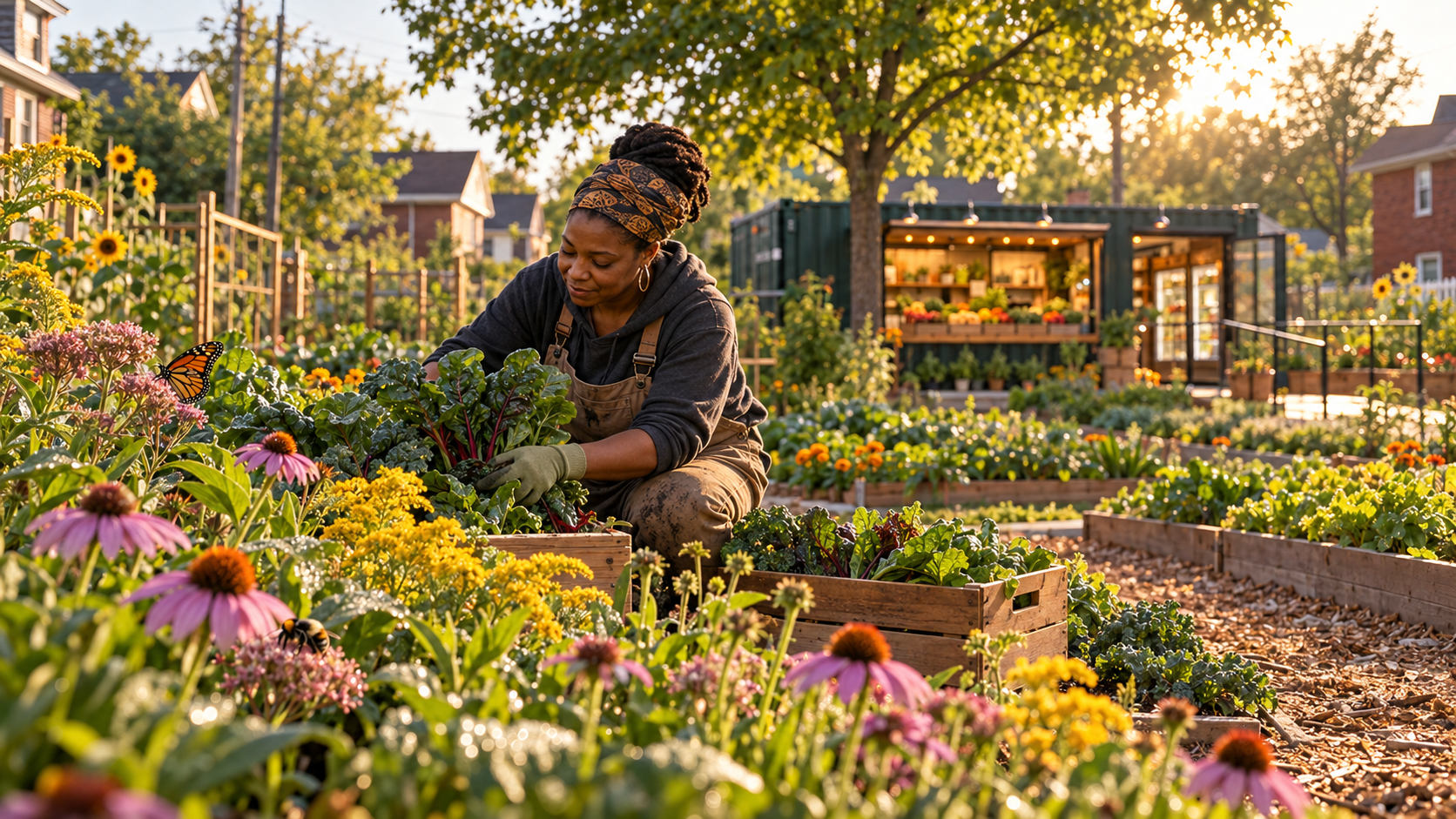
Grow herbs, vegetables, and seasonal ingredients.
Entrepreneurs buy neighborhood-grown ingredients.
Make prepared and packaged goods.
Sell at the farm stand. Reinvest locally.
Make.
Return.A sustainable food + commerce ecosystem
Grow. Shop.
Connect.
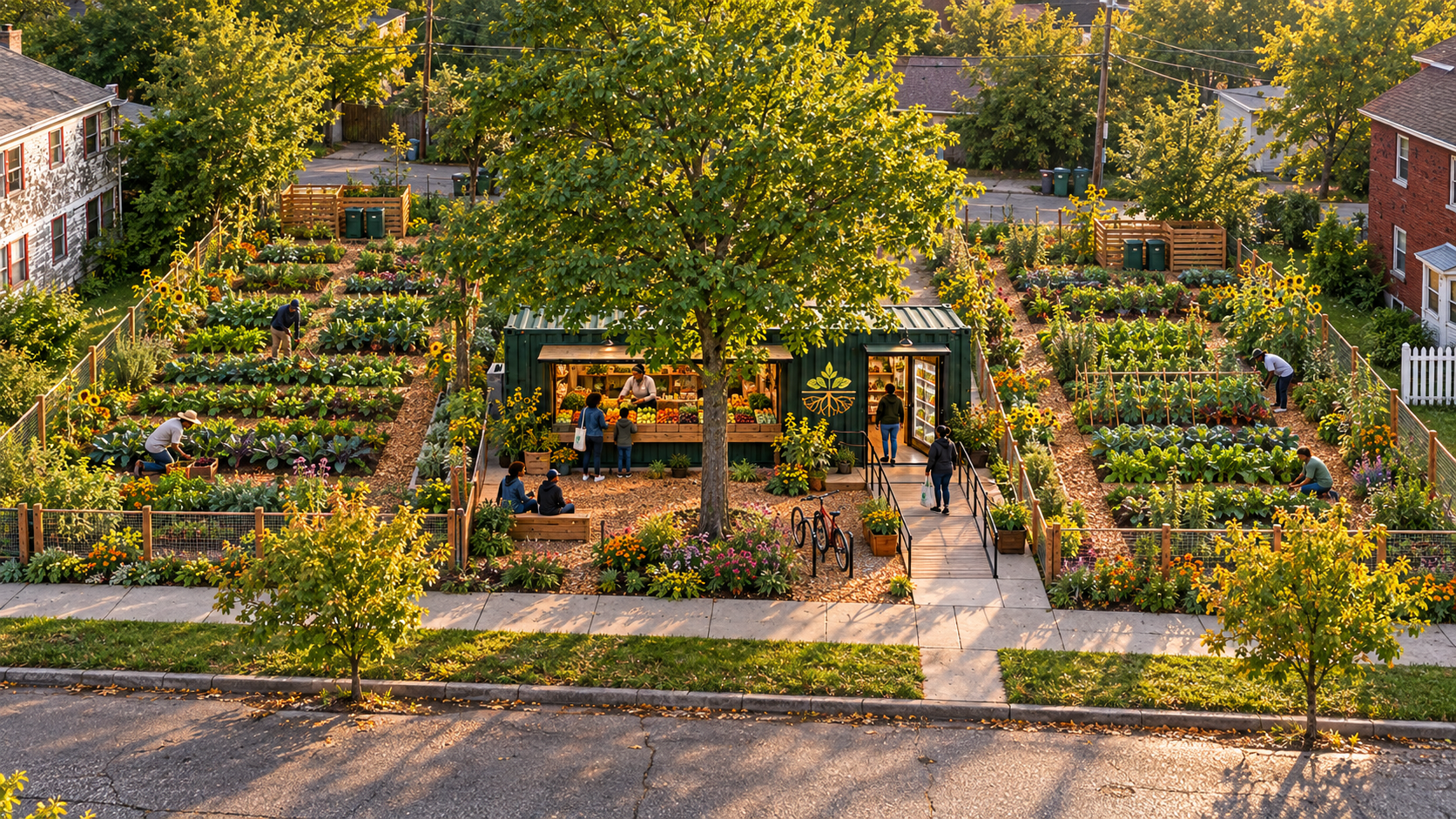
Two grow sites. One farm stop. A connected neighborhood system.
A neighborhood hub for food, work, learning, and connection.
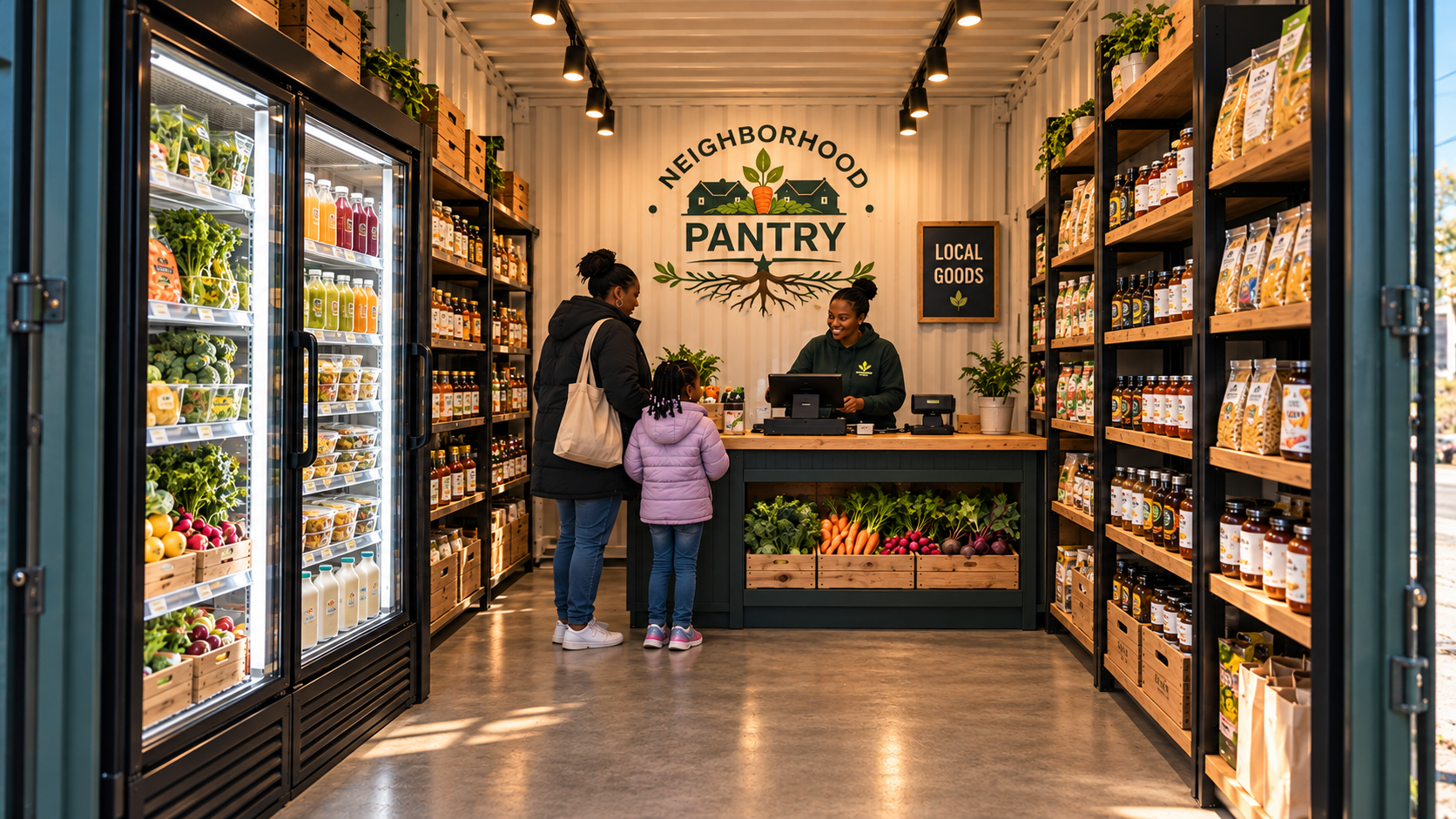
- Fresh food aggregation, pickup, and neighborhood sales
- Shelf space for locally made food and natural goods
- Community events, tastings, classes, and relevant programming
- Technical assistance and shared business infrastructure
- Paid work, volunteer opportunities, and resident stewardship
Benchmarked against Michigan farm-stop programs and USDA urban-agriculture funding. Parcel conditions, environmental review, design, and vendor quotes will refine costs.
- Land acquisition, testing + site readiness
- $22,500
- Farm-stand container purchase + fabrication
- $32,500
- Water, electrical, drainage + utility connections
- $20,000
- Refrigeration, retail + food-safe equipment
- $16,000
- Grow beds, soil, irrigation + pollinator habitat
- $12,000
- Survey, design, permits, legal + insurance
- $9,000
- Launch operations + maintenance reserve
- $13,000
Launch reserve covers opening inventory, initial staffing, maintenance, and an operating buffer.
State awards commonly fund equipment, processing, distribution, and farm-stop expansion.
Federal urban-agriculture implementation grants establish a more realistic scale for a complete, multi-component project.
Planning-level project estimate—not a contractor bid or appraisal. Renderings illustrate design intent, not surveyed conditions or approved construction. Planned SNAP/EBT participation is subject to authorization. Final scope, funding structure, schedule, accessibility, utilities, environmental conditions, permitting, and program participation remain subject to verification. Michigan benchmark ↗ USDA benchmark ↗